Grace Cromwell
Wolf HallGrace Cromwell, the younger daughter of Thomas Cromwell and Lizzie, is a small but affecting presence in the household’s story of sudden loss. Her few appearances trace a child’s dependence on the adults around her: she trusts her father when he lifts her from the room where her mother has died, and later wakes at night with an image of her mother in a shroud.
Identity and Family
Grace is one of Thomas and Lizzie’s daughters, and Anne’s younger sister. In the family’s affectionate account, Anne is a tough child, but Grace is presented through more vulnerable gestures: she looks up uncertainly, accepts comfort, and is still small enough to be carried to bed. At her mother’s death, the sisters are together in their nightclothes, their mother’s lace nightcaps tied beneath their chins.
Her father’s earlier thoughts place the girls against the royal family’s preoccupation with children and succession. Thomas contrasts the queen’s diminutive daughter, Mary Tudor, with his own daughter Anne, who is a few years younger, and calls Anne tough. Grace belongs to the same domestic world, but the narrative gives her no comparable description of character or ambition. Her significance rests instead in the concrete vulnerability of a child whose security depends on family care.
The Night Lizzie Dies
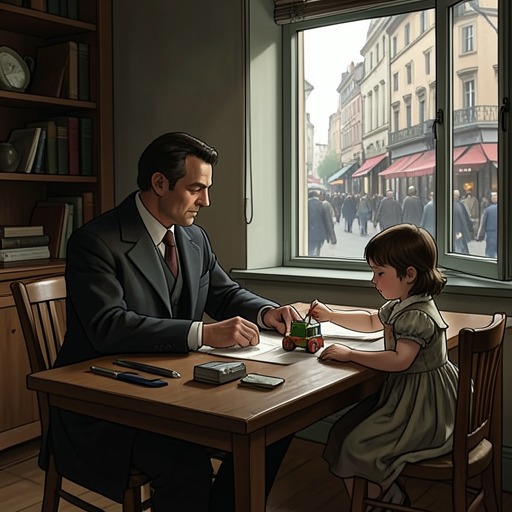
When Thomas returns home, the household’s distress makes him fear first that his son, Gregory, has died. He then understands that the missing person is Lizzie. The girls are still awake, dressed for bed as if the night were ordinary. Anne’s face is set; she holds Grace’s hand in her fist. Grace looks up at her father with doubt—she almost never sees him—but trusts him enough to let him lift her without protest.
She falls asleep at once against his shoulder, arms around his neck and the crown of her head beneath his chin. Thomas tells Anne that Grace must be taken to bed because she is little and might wake cold; Anne replies that she too might feel cold. The exchange makes the sisters’ different needs visible without turning either into an abstraction: one is carried, the other insists that her own fear and exposure be acknowledged. Thomas waits with Anne until her silent crying stops and her hand relaxes in his, while Mercy puts Grace down without waking her.
A Household After Loss
After Lizzie’s death, family and friends gather at Austin Friars. Thomas’s sisters discuss which of them will move in to help Mercy with the girls until he marries again. The children are present amid the adults’ mourning and conversation, dependent on decisions being made around them. Grace’s cousins Alice and Johane draw her into their company: they remove her cap, shake out her blonde hair, and begin to plait it. When Grace’s mouth opens in a silent gape and she manages a squeak, Johane crosses the room and scoops her up.
The small scene gives Grace a place in the network of female care that gathers around the bereaved household. The adults speak of money, trade, and Thomas’s loyalty to Cardinal Wolsey; the children receive the more immediate work of comfort and attention. Grace does not speak at length or direct events. Her presence instead registers how a family’s routines and responsibilities shift after a mother’s death, and how relatives step in to meet the children’s needs.
Memory and Narrative Significance
At the family’s later prayers for Lizzie, Grace wakes in the night and says she sees her mother in her shroud. Her grief is described as an adult woman’s weeping, marked by dread rather than a child’s noisy, hiccupping sobs. The vision is reported as Grace’s experience; the narrative does not establish that Lizzie’s ghost is actually present. The episode joins the household’s religious acts of remembrance to a child’s intimate, frightening image of the dead.
Grace’s appearances remain brief, but their sequence is consequential: she sleeps safely against her father while he confronts the immediate loss, is cared for by relatives as the household reorganizes, and later gives voice to the image of her dead mother. Around her, adults make plans and speak of the future; her gestures show what those plans are meant to protect. The narrative thus makes bereavement legible not only through Thomas’s grief, but through the children whose ordinary dependence continues after the person who cared for them is gone.